
Da Vinci Diamonds: your chance for a big score!
Home → Strategy
Da Vinci Diamonds Strategy
Approaching Da Vinci Diamonds sensibly
The theoretical return of 94.93% for Da Vinci Diamonds establishes a house edge of 5.07% over very long runs. This percentage means that for every 100 units wagered, the game retains approximately 5.07 units as profit for the operator. Players must understand this mathematical reality before committing any funds to the reels. The medium volatility suggests moderate risk during standard play sessions.
Comparing the 94.93% RTP to Triple Diamond reveals a slight disadvantage for the slot enthusiast. Triple Diamond offers a higher return of 95.06%, which reduces the house edge to 4.94%. This difference is marginal but relevant for players who prioritize mathematical efficiency in their gaming choices. The IGT developer designed both titles with distinct mechanical approaches.
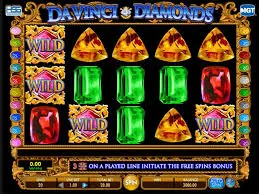
Da Vinci Diamonds features a 5x3 grid layout with 20 ways to win active on every spin. This structure allows for multiple simultaneous winning combinations across adjacent reels from left to right. The maximum win cap stands at 5,000x the total bet amount for a single session. Players should track their bankroll against this potential payout ceiling carefully.
Bankroll rules that hold up
A defined bankroll represents the specific sum of money allocated exclusively for playing Da Vinci Diamonds. This financial boundary prevents players from dipping into essential living expenses or credit lines. The IGT studio created this slot with medium volatility, requiring sufficient funds to withstand dry spells. Maintaining strict separation between gambling funds and personal finances is crucial for responsible play.
Flat betting involves wagering the same stake amount on every single spin throughout the session. This strategy helps stabilize the rate of bankroll depletion compared to progressive staking methods. With a 5.07% house edge, consistent betting minimizes variance impact on the total balance. Players using flat bets can better predict their potential losses over extended periods of time.
Progressive staking involves raising stakes after losses, which significantly shortens the time to ruin. This method does not alter the built-in 5.07% edge but accelerates the exhaustion of the bankroll. The maximum win of 5,000x remains unaffected by the betting progression strategy chosen. Analysts recommend avoiding dynamic stake adjustments when managing limited gaming funds effectively.
Bet sizing against volatility
Medium volatility in Da Vinci Diamonds requires bet sizes that balance risk with session longevity. Smaller stakes allow players to experience more spins before the bankroll is depleted significantly. The 20 ways to win mechanism activates frequently enough to sustain engagement without large swings. Adjusting the bet level ensures the player can endure the natural variance of the game.
The 94.93% RTP dictates the long-term expected loss per unit wagered on each spin. Calculating the cost per hour depends heavily on the chosen bet size and spin speed. A higher bet increases the absolute monetary loss rate while maintaining the same percentage edge. Players should align their stake with their total available bankroll to extend playtime reasonably.
Triple Diamond presents low volatility with only three reels, contrasting sharply with the five-reel layout of Da Vinci Diamonds. The lower volatility means smaller but more frequent wins, whereas Da Vinci Diamonds offers larger potential payouts. The max win of 1199x for Triple Diamond is significantly lower than the 5,000x cap here. Choosing the right game depends on whether the player prefers steady returns or bigger hits.
Session limits worth setting
Setting a time limit for Da Vinci Diamonds sessions helps prevent fatigue-induced decision-making errors. Medium volatility games can create illusions of control due to intermittent reinforcement patterns. The tumbling reels feature extends gameplay duration beyond standard spin mechanics significantly. Players should monitor their actual playing time against pre-determined boundaries strictly.
A loss limit defines the maximum amount a player is willing to lose in one sitting. Once this threshold is reached, all activity on the 5x3 grid must cease immediately. The 5.07% house edge ensures that prolonged play statistically favors the casino operator. Enforcing hard stops protects the remaining bankroll from further erosion during losing streaks.
Win goals provide a target for exiting the session before greed takes over gameplay decisions. Securing a portion of the 5,000x max win potential locks in positive results early. The retriggerable free spins bonus can significantly boost the session total if triggered correctly. Cash out protocols should be established before the first spin to maintain discipline effectively.
Why chasing losses fails
Chasing losses attempts to recover previous deficits by increasing bet sizes or playing longer sessions. This behavior ignores the immutable 5.07% house edge present in every single spin outcome. The probability of winning remains constant regardless of past results or current bankroll status. Mathematical expectation guarantees that aggressive recovery strategies lead to faster financial depletion overall.
Da Vinci Diamonds operates on independent events where the tumbling reels do not influence future spins. Each new cycle resets the probability distribution back to the baseline 94.93% return rate. Believing that a big win is imminent after a series of losses is a cognitive bias. The medium volatility does not guarantee immediate correction of earlier negative variances experienced.
Comparing this approach to Triple Diamond highlights the danger of altering stake amounts arbitrarily. Triple Diamond's low volatility might tempt players to increase bets hoping for quick reversals. However, the 95.06% RTP still applies regardless of the betting pattern employed by the user. Accepting losses as part of the entertainment cost preserves the integrity of the bankroll management.
Da Vinci Diamonds: key facts
| Parameter | Value |
|---|---|
| Game | Da Vinci Diamonds |
| Studio | IGT |
| Released | 2012 |
| RTP | 94.93% |
| House edge | 5.07% |
| Volatility | medium |
| Max win | 5,000x |
| Reels | 5x3 grid |
| Paylines / ways | 20 ways to win |
Common systems and their limits
Da Vinci Diamonds features a 94.93% RTP, which establishes a fixed house edge of 5.07% on every spin regardless of the betting strategy employed by the player. This mathematical constant means that no pattern of wagering can alter the long-term expected loss rate or overcome the casino's built-in advantage over time. Players often believe that tracking previous outcomes influences future results, but each tumble reel sequence remains an independent random event with identical probabilities.
The game utilizes a 5x3 grid layout with 20 ways to win, creating a specific variance profile that dictates how frequently payouts occur relative to their size. A medium volatility setting suggests that wins will appear at moderate intervals rather than in large, rare clusters, which aligns with the theoretical return over hundreds of thousands of spins. This structure prevents high-frequency small wins from masking the underlying negative expectation inherent in the slot mechanics.
Wolf Run offers a slightly higher RTP of 94.98%, yet its medium volatility and max win cap of 1000x still cannot eliminate the fundamental disadvantage faced by the bettor. Comparing Da Vinci Diamonds maximum win potential of 5,000x against Wolf Run reveals that higher payout ceilings do not equate to better overall returns for the player. The difference in return percentages is marginal, but both titles operate under the same immutable laws of probability that favor the house.
Flat betting explained
Flat betting requires the player to maintain the same stake amount for every round played during a session at Da Vinci Diamonds, ignoring any previous win or loss history. This method controls the bankroll decay rate by ensuring that losses accumulate at a predictable pace proportional to the total number of spins executed. It avoids the dangerous habit of increasing wagers after defeats, which typically accelerates the depletion of funds without improving the odds of recovery.
With a theoretical return of 94.93%, a flat bet of 1 € per spin results in an expected loss of 0.0507 € per turn, translating to roughly 30.42 € lost per hour at 600 spins. This steady erosion allows players to extend their playtime significantly compared to volatile staking strategies that risk the entire bankroll quickly. The consistency of this approach provides a clearer view of the game's actual performance metrics without the distortion of variable bet sizes.
Da Vinci Diamonds includes tumbling reels that can trigger multiple consecutive wins from a single spin, but flat betting ensures that the profit from these cascades is not immediately reinvested at higher levels. If a player increases their stake following a free spins retrigger, they expose themselves to greater variance that contradicts the stability of the initial plan. Maintaining a constant wager preserves the integrity of the bankroll management strategy throughout the bonus feature duration.
Progressive staking risks
Progressive staking involves raising the bet size after a loss in an attempt to recoup previous deficits quickly, a strategy that fundamentally misunderstands how the 5.07% house edge operates. Increasing stakes does not change the mathematical expectation of each individual spin; it only magnifies the speed at which the bankroll is exhausted during a losing streak. The gambler's fallacy assumes that a win is due, but the slot machine has no memory of prior outcomes to correct this imbalance.
Da Vinci Diamonds allows bets across its 20 ways to win, meaning that escalating the stake multiplies the monetary impact of each failed tumble reel sequence exponentially. A progression system might require a bankroll large enough to sustain ten consecutive losses at increasing levels, which is statistically unlikely to survive over a full session. The maximum win cap of 5,000x cannot be reached through aggressive betting alone if the funds are depleted before a qualifying combination appears.
Wolf Run shares similar medium volatility characteristics, yet applying progressive staking to either title yields the same negative outcome due to the fixed RTP of approximately 95%. Raising the bet from 1 € to 2 € after a loss doubles the exposure to the house edge without altering the probability of hitting the Da Vinci painting symbols. This approach transforms a controlled loss into a rapid financial decline, making it unsuitable for sustainable play.
What the maths actually allows
The 94.93% RTP of Da Vinci Diamonds indicates that for every 100 € wagered over an extended period, the game returns 94.93 € to players in the aggregate. This figure represents a long-run average derived from millions of spins and cannot guarantee any specific result for a short session or a single bonus round. The remaining 5.07% constitutes the casino's revenue margin, which is built into the symbol values and the probability distribution of the 5x3 grid.
A maximum win of 5,000x sets a hard ceiling on the payout potential, limiting the upside even when the tumbling reels chain together multiple consecutive victories. This cap restricts the ability of high rollers to recover large losses through a single lucky spin, as the prize cannot exceed fifty thousand times the original stake. The medium volatility ensures that such extreme events are rare, preserving the bankroll for more frequent, smaller distributions.
Comparing this to Wolf Run, which caps wins at 1000x, demonstrates that Da Vinci Diamonds offers higher variance in terms of peak payout potential despite having a lower RTP. The 5,000x multiplier applies to the base bet, meaning a 1 € wager could theoretically yield 5,000 € if all conditions for the top prize are met. However, the frequency of such events is governed by the game's internal algorithm, which favors the house over the long term.
Reading variance honestly
Medium volatility in Da Vinci Diamonds means that the standard deviation of results falls between low-frequency high-payout games and high-frequency low-payout slots. Players should expect periods of stagnation where the tumbling reels fail to produce significant combinations, followed by clusters of wins during free spins bonuses. This fluctuation is normal and reflects the mathematical design intended to balance entertainment value with the retention of the house edge.
The 20 ways to win structure creates a higher hit frequency than traditional payline slots, but these wins are often smaller than the total stake, leading to net losses over time. A player might experience several winning spins in succession, yet the cumulative return rarely exceeds the initial outlay due to the 94.93% return rate. Understanding this dynamic prevents the misinterpretation of short-term luck as a sustainable strategy for beating the game.
Wolf Run also exhibits medium volatility but distributes its 1000x max win differently across its 5-reel layout, affecting the perceived intensity of the gameplay compared to Da Vinci Diamonds. While both titles offer engaging bonus features like free spins, the variance profile dictates how quickly a bankroll might shrink or grow during a session. Honest assessment requires acknowledging that neither game offers a positive expectation, regardless of the excitement generated by the gemstone symbols.
Learning the game in demo first
Da Vinci Diamonds, developed by IGT and released in 2012, features a 5x3 grid layout with 20 ways to win. This structure allows players to observe the Tumbling Reels mechanic without risking their bankroll during extended play sessions. Understanding how gemstone symbols trigger retriggerable free spins helps clarify the medium volatility behavior before real money is wagered.
The theoretical return to player stands at 94.93%, establishing a house edge of 5.07% over very long runs. Players can compare this efficiency against White Orchid, which offers an RTP of 95.03% with medium volatility on a 5x4 grid. Knowing these percentages informs expectations about potential returns during typical gameplay sessions involving thousands of spins.
Demo mode enables testing the maximum win cap of 5,000x without financial exposure to the built-in statistical disadvantage. Observing how tumbling reels cascade after each win reveals the frequency of symbol replacements and potential payout clusters. This practice builds familiarity with the Da Vinci painting theme and its specific bonus triggers for future reference.
Adjusting stakes to your budget
Flat betting requires maintaining the same stake every round to preserve the bankroll against the 5.07% house edge inherent in Da Vinci Diamonds. Progressive staking raises stakes after losses but does not alter the mathematical advantage held by the casino operator. Consistent wagering prevents rapid depletion of funds during periods of low hit frequency on the 20-way payline system.
A session utilizing flat bets ensures that the medium volatility of IGT's 2012 release does not cause erratic balance fluctuations. Players should calculate total exposure by multiplying their chosen stake by the estimated number of spins per hour. This calculation helps determine if the budget aligns with the expected duration of play before encountering significant variance.
White Orchid presents a slightly higher RTP of 95.03%, suggesting marginally better long-term retention for consistent bettors. However, Da Vinci Diamonds remains distinct with its unique tumbling reels and retriggerable free spins bonus feature. Adjusting stakes based on personal loss limits rather than chasing wins maintains control over the gambling experience effectively.
Recognising a bad session
A bad session often manifests when consecutive spins fail to trigger the Tumbling Reels or any winning combinations on the 5x3 grid. Since Da Vinci Diamonds has a house edge of 5.07%, prolonged dry spells are statistically inevitable during medium volatility play. Players monitoring their balance decline faster than predicted by the 94.93% RTP should consider pausing their activity immediately.
The maximum win cap of 5,000x represents the highest possible payout from a single spin sequence within the game mechanics. Exceeding expected loss rates without hitting this cap indicates unfavorable variance rather than a strategic error in betting patterns. Recognizing when the bankroll shrinks significantly below the initial deposit signals that the current session may be unprofitable.
Comparing performance against White Orchid's 95.03% RTP highlights why some sessions feel less rewarding despite similar volatility levels. Da Vinci Diamonds' 94.93% return means players retain slightly less capital over identical spin counts compared to other titles. Accepting these mathematical realities prevents chasing losses through increased wagering amounts that accelerate fund depletion rapidly.
Stopping while ahead
Securing profits involves cashing out once the bankroll exceeds the initial deposit by a predetermined percentage, such as 50%. Da Vinci Diamonds offers a maximum win of 5,000x, providing substantial opportunities for gains during retriggerable free spins rounds. Withholding further wagers after achieving such targets protects accumulated winnings from the inevitable 5.07% house edge erosion.
The theoretical return of 94.93% confirms that sustained play inevitably reduces total funds unless disciplined exit strategies are employed. Players who withdraw after triggering multiple cascades benefit from the medium volatility nature of IGT's 2012 slot release. Setting hard stop-loss and take-profit limits ensures that temporary winning streaks translate into actual realized profit rather than virtual gains.
White Orchid's 95.03% RTP suggests comparable long-term performance, yet immediate results vary due to independent random number generation. Stopping while ahead on Da Vinci Diamonds prevents the regression toward the mean from wiping out recent successes. Maintaining strict boundaries around session duration and monetary limits preserves the integrity of the overall gaming bankroll effectively.
Responsible play in practice
Setting a fixed time limit for playing Da Vinci Diamonds helps mitigate the risks associated with its engaging tumbling reels feature. The 20 ways to win create frequent small payouts that can encourage continuous play beyond intended durations. Monitoring session length alongside balance changes ensures that the 5.07% house edge does not disproportionately impact weekly entertainment budgets.
Understanding that volatility describes risk level rather than winning frequency clarifies why medium volatility slots like this IGT title require patience. The 94.93% RTP serves as a long-term average across hundreds of thousands of spins, not a guarantee for individual sessions. Players should view each spin as an isolated event governed by chance rather than a predictable outcome based on past results.
Using the 300% welcome bonus up to €2,000 plus 100 free spins provides additional playtime without increasing personal financial risk. Such promotions allow testing the Da Vinci painting theme and gemstone symbols under protected conditions before committing real funds. Responsible gambling practices involve treating bonuses as entertainment extensions rather than reliable income sources or guaranteed paths to profit.
DemoRTP & VolatilitySymbols & PayoutsBonus FeaturesStrategyBonusesMobileDownload & AppMax WinSimilar GamesReviewFAQSitemap
Da Vinci Diamonds 2025